⚡ Inverter Guide🔋 Hybrid Systems🇵🇭 Philippines🛡️ Safety First📅 2026 Updated
Inverter vs Hybrid Inverter in the Philippines (2026 Guide): Which One Should You Choose?
Updated: April 2026 · By Solar Panda
The most expensive solar mistakes in the Philippines usually happen before installation: wrong inverter type, unrealistic backup expectations, and poor safety planning. A lot of homeowners are told "just get a hybrid inverter" without understanding if they actually need one. Others buy a basic inverter setup because it is cheaper, then spend more later when they try to add batteries during brownout season.
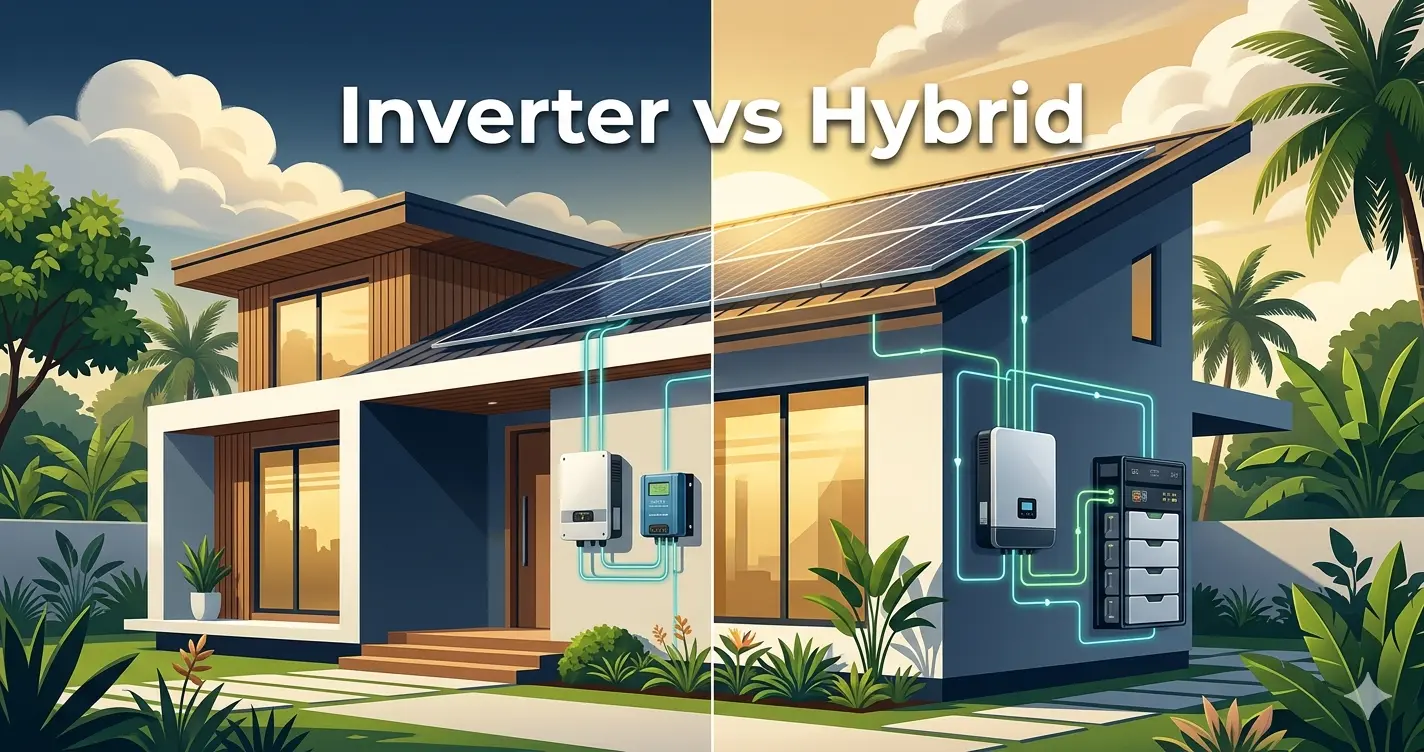
This guide is built to prevent that. We will compare a standard inverter setup (commonly paired with an external MPPT charge controller) and a hybrid inverter setup in practical terms: power flow, backup behavior, cost impact, expansion flexibility, and safety.
Quick Answer
If your home is grid-connected, has frequent outages, or you plan to add batteries soon, a hybrid inverter is usually the better long-term choice. If your roof is straightforward, your grid is stable, and your priority is lowest upfront cost, a standard inverter with external MPPT can still be an efficient and practical system when designed correctly.
What Is the Real Difference?
At a high level, both systems convert DC solar power to AC power for appliances. The key difference is energy management intelligence.
Standard Inverter + External MPPT
Simple architecture, cost-first approach
A standard inverter's main job is DC-to-AC conversion. In many practical builds, battery charging is handled by a separate MPPT charge controller. This is why you often hear "inverter + MPPT" as a common pairing in DIY and entry-level systems.
- Lower initial hardware cost in many cases
- Easy to understand and troubleshoot when properly wired
- Can work well for homes with stable utility service and limited backup requirements
Hybrid Inverter
Solar, battery, and grid in one controller brain
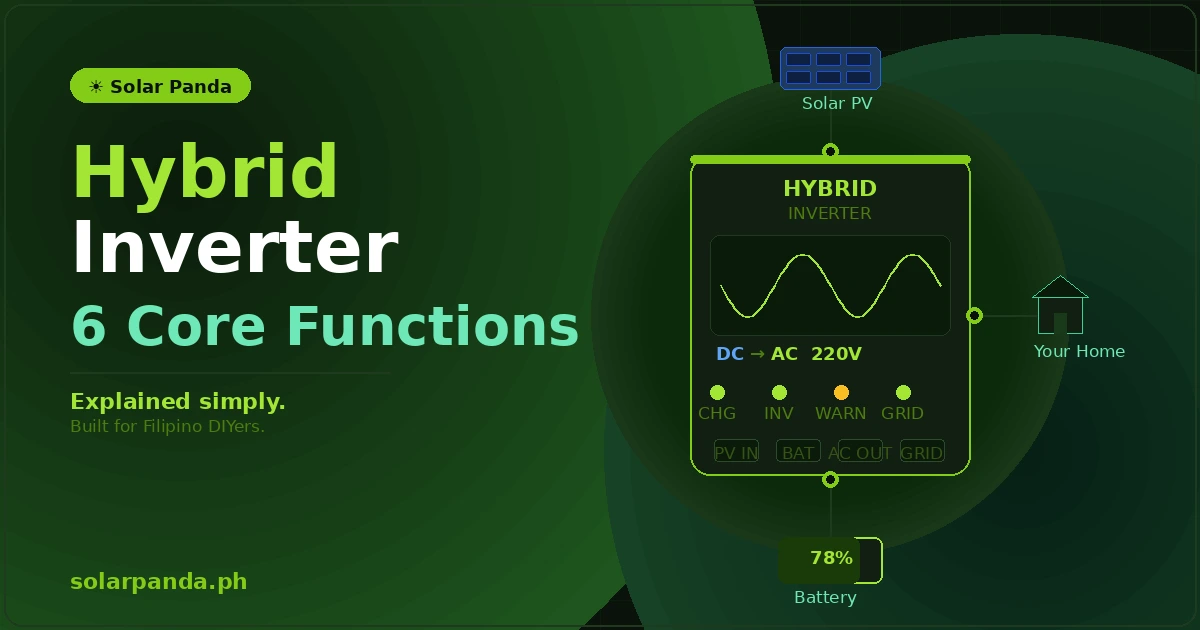
A hybrid inverter combines multiple functions in one unit: inverter, battery charging control (often with built-in MPPT), and source switching logic between solar, battery, and grid. Instead of separate devices deciding independently, one controller manages the full flow.
- Better for backup continuity and battery integration
- Cleaner system architecture with fewer separate boxes
- Stronger long-term flexibility for homes planning future upgrades
Why MPPT Matters in Both Systems
MPPT (Maximum Power Point Tracking) is not just a technical buzzword. It is the control logic that keeps your panels operating near their best voltage-current point as sunlight and temperature change throughout the day. Without effective MPPT behavior, your system leaves usable energy on the roof.
In a standard setup, MPPT is usually performed by an external charge controller. In many hybrid inverters, MPPT channels are integrated directly. The practical takeaway is this: regardless of setup type, you want proper MPPT sizing, correct string voltage windows, and safe current margins. A wrong MPPT range can reduce harvest and stress components in hot weather.
ℹ️
Professional rule: Choose inverter type based on your energy behavior (backup needs, battery plan, grid reliability), not just sticker price. Then verify MPPT voltage/current compatibility with your actual panel configuration.
Architecture and Power Flow (Practical View)
Standard Inverter + MPPT
Solar panels feed MPPT controller, MPPT manages battery charging, and inverter draws DC from battery or DC bus to supply AC loads. Grid support is usually external (ATS/manual transfer or separate logic depending on design).Hybrid Inverter
Solar, battery, and grid are managed centrally. The inverter can prioritize solar for daytime loads, charge battery from surplus, switch to battery during outages, and use grid when needed based on settings.For many Filipino homes, this architecture difference is where long-term comfort is decided. If your family expects "it should just work" during outages, a properly configured hybrid setup usually gives a more predictable experience. If your goal is simply to reduce monthly kWh purchased from the grid and outages are rare, a standard inverter + MPPT design may be enough.
Head-to-Head Comparison Table
| Category | Standard Inverter + MPPT | Hybrid Inverter |
|---|---|---|
| Upfront Cost | Usually lower for basic builds | Higher initial cost, more features integrated |
| Battery Integration | Separate control components, more design effort | Native battery logic, easier centralized control |
| Backup During Outage | Possible, but depends on full system design | Generally better backup behavior when configured correctly |
| System Expansion | Can expand, but often needs extra hardware planning | Usually more future-ready for battery and smart control growth |
| Complexity | Simple concept, but more separate devices | Single platform but needs proper configuration |
| Best Fit | Stable-grid, budget-focused, straightforward loads | Frequent outages, battery-first strategy, resilience priority |
Best Use Case: Standard Inverter + MPPT
Choose this path when your objectives are clear and simple:
Budget Priority
You need the lowest feasible upfront cost and can accept a more modular setup with separate devices.
Stable Utility Supply
Your area has relatively reliable grid service and outages are short or infrequent.
Simple Load Profile
Your primary goal is bill reduction, not full-house seamless backup.
Technical Supervision
You have access to a qualified installer who can size MPPT, breakers, and battery protection correctly.
A standard inverter + MPPT system is still a valid professional design in 2026. It is not "old tech." It simply serves a different objective: affordability and targeted efficiency where backup automation is not the top requirement.
⚠️
Common mistake: Under-sizing battery and expecting whole-home backup. In modular setups, always define your critical loads first (ref, lights, router, selected fans) and design to that list.
Best Use Case: Hybrid Inverter
Choose hybrid when resilience and control matter more than minimum upfront price:
Frequent Brownouts
Your barangay experiences regular interruptions and your family needs stable power for critical loads.
Battery-Ready Today
You want to add storage now or in the near future without redesigning half the system architecture.
Energy Control
You want smarter source priority behavior: solar first, battery second, grid assist when needed.
Long-Term ROI Thinking
You prefer fewer retrofit surprises and better expansion options over a lower day-one purchase price.
In many urban and suburban homes in the Philippines, hybrid becomes the better value after two or three years, especially when outage frequency rises or battery pricing improves and you decide to expand storage.
💡
Future-proofing tip: If you are undecided but know you might add batteries in 12-24 months, a hybrid-ready path usually avoids duplicate labor, duplicate breakers, and rework costs.
Safety Checklist Before You Buy
This section matters more than model brand debates. A safe system is a usable system.
🔴
Never guess breaker sizes. DC and AC protection should be calculated from real current, voltage class, and equipment specs with proper safety margins. Wrong protection is a fire risk.
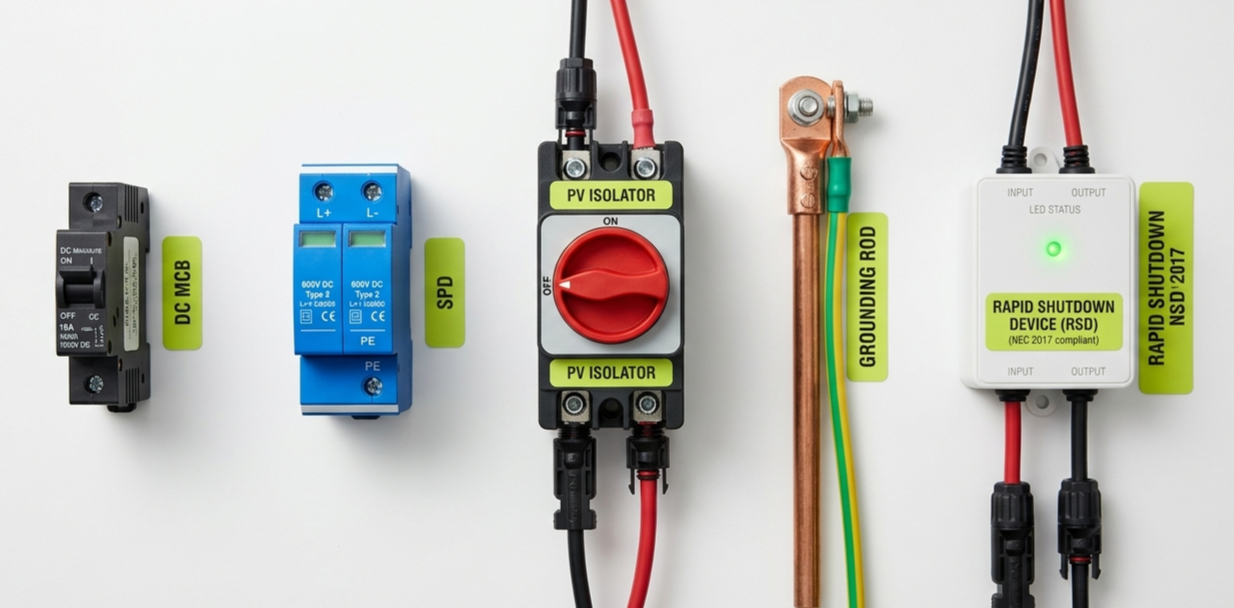
DC Isolation
Install proper DC isolators and verify voltage rating. Cheap underspecified switches fail fast under arcing conditions.
SPD and Grounding
Use surge protection devices on PV/DC and AC sides where applicable, and maintain correct grounding continuity.
Battery Ventilation
For chemistries that require ventilation, do not place batteries in enclosed unvented spaces. Follow manufacturer guidance.
Cable and Lugs
Use properly crimped lugs, correct cable gauge, and torque terminals to spec. Loose terminations are a common heat point.
Critical Load Panel
For backup systems, separate critical loads from heavy non-critical loads to preserve battery runtime during outages.
Qualified Commissioning
Final commissioning should include polarity check, insulation checks, parameter verification, and test outage simulation.
If a seller cannot clearly explain protection design, grounding, and commissioning tests, treat that as a red flag no matter how attractive the package price looks.
2026 Decision Framework for Filipino Homeowners
If you want a fast, reliable decision:
- Start with your outage reality. If outages are frequent and disruptive, hybrid is usually the practical choice.
- Define critical loads first. This avoids overspending and prevents underpowered backup expectations.
- Choose battery strategy early. "Maybe battery later" still affects inverter choice today.
- Check roof and shading conditions. Shading and mixed roof orientations affect MPPT planning quality.
- Buy from support, not just price. Warranty handling and local technical support matter more than small upfront savings.
For remote areas with little or no reliable grid, off-grid-focused designs may be appropriate, but they require stricter battery autonomy planning and disciplined load management. In those cases, daily energy budgeting is non-negotiable.
Final Recommendation
For most grid-connected homes in the Philippines in 2026:
- If your top goal is resilience, battery integration, and smoother outage behavior, choose a hybrid inverter — our Hybrid Inverter Finder narrows the options to your load.
- If your top goal is lower upfront cost and your site has stable grid and simpler energy needs, a standard inverter + MPPT can still be an excellent system — compare units with the Inverter Finder.
The best system is not the most expensive one. It is the one that matches your household behavior, your outage pattern, and your safety standards.
Need Help Sizing Your System Correctly?
Use the Solar Panda calculator to estimate the right solar and battery size for your monthly consumption, then choose the inverter architecture that fits your real usage pattern.
Calculate My Solar Setup →