Things You Need to Start Your DIY Solar Setup
Welcome, fellow DIY enthusiasts! If you're looking to set up your own solar power system at home, you've come to the right place. A DIY solar setup might sound intimidating at first, but once you understand what each component does and why it matters, the whole system starts to make sense. Think of it like building a simple circuit — every part has a job, and together they work as a team.
Below are the essential components you'll need to get started, from the panels on your roof to the wires connecting everything. I'll also share some practical tips based on real experience setting up solar in Philippine conditions.
⚡ Quick Overview: The 6 Essential Components
Before we dive deep into each one, here's the complete list of what you'll need:
| # | Component | What It Does |
|---|---|---|
| 1 | 🌞 Solar Panels | Harvests sunlight and converts it to DC electricity |
| 2 | 🎛️ Solar Charge Controller | Safely regulates charging to protect your batteries |
| 3 | 🔋 Batteries | Stores energy for use at night or on cloudy days |
| 4 | 🔌 Inverter | Converts DC battery power to 220V AC for your appliances |
| 5 | 🔗 Wires | Connects all components safely and efficiently |
| 6 | 🛡️ Breakers | Protects your system from overloads and short circuits |
🌞 1. Solar Panels
The most visible part of any solar system, solar panels are what you see on a roof. Their job is to harvest energy from the sun and convert it into direct current (DC) electricity. They are rated in watts (W), which indicates their power output under standard test conditions. You'll commonly find panels rated from 50W to 710W or higher.
Monocrystalline vs. Polycrystalline
When choosing panels for a Philippine home, there are a few things worth knowing:
- Monocrystalline panels are the most efficient and perform better in partial shade or on cloudy days — which matters a lot during the rainy season. They're slightly more expensive, but the efficiency gain is usually worth it.
- Polycrystalline panels are more budget-friendly but lose efficiency faster in high heat and partial shade.
💡 Tip: For most Filipino homes, monocrystalline is the better long-term investment.
How Many Panels Do You Need?
For a typical Filipino household with a monthly bill of ₱3,000–₱5,000, you'll likely need somewhere between 4 to 8 panels rated at 400W–600W each. Prices today are around ₱7 per watt, so a 500W panel costs roughly ₱3,500 — a far cry from what they cost just five years ago.
🌡️ Watch Out for Temperature Coefficient
Since the Philippines is hot, panels will operate above 25°C most of the time. Always check the panel's temperature coefficient:
- ✅ -0.30%/°C — loses less efficiency on hot days (preferred)
- ⚠️ -0.45%/°C — loses more power as temperatures rise
🎛️ 2. Solar Charge Controller (SCC)
The solar charge controller is the brain behind your battery charging. It receives the raw energy generated by your solar panels and regulates it to safely charge your batteries, preventing overcharging, over-discharging, and other issues that can permanently damage your battery bank.
SCCs are specified by their voltage (12V, 24V, or 48V) and amperage (20A, 40A, or 60A). A higher amperage rating means the controller can manage more panels, leading to faster and more efficient charging.
PWM vs. MPPT — Which Should You Choose?
| Feature | PWM | MPPT |
|---|---|---|
| Cost | ✅ Cheaper | ⚠️ More expensive |
| Efficiency | Lower | ✅ 10–30% more energy recovered |
| Best for | Small, budget setups | Medium to large setups |
| Scalability | Limited | ✅ Better for future expansion |
💡 Tip: If you plan to scale up your system later, go MPPT from the start — replacing a PWM controller after the fact costs more in the long run. Compare current models with our Solar Charge Controller Finder.
🔋 3. Batteries
Batteries are the energy storage heart of your system. They charge during the day when the sun is out and provide power at night or during extended cloudy periods. The capacity of a battery is measured in amp-hours (Ah), and they come in 12V, 24V, or 48V configurations.
Calculating Storage Capacity
To figure out how much energy a battery can store, use this simple formula:
Volts × Amp-Hours = Watt-Hours (Wh)
Example: 12V × 100Ah = 1,200Wh — enough to run a 60W fan for 20 hours
Battery Types Available in the Philippines
| Type | Lifespan | Maintenance | Cost | Best For |
|---|---|---|---|---|
| 🪫 Flooded Lead-Acid (FLA) | 3–5 years | Regular (distilled water top-up) | ✅ Cheapest | Outdoor/ventilated areas |
| 🔒 Sealed AGM | 4–6 years | None | Mid-range | Indoor home setups |
| ⚡ LiFePO4 Lithium | 8–15 years | None | ⚠️ Most expensive upfront | Best long-term value |
💡 Tip: For most Filipino DIYers starting out, AGM batteries strike the best balance between cost and convenience. Budget around ₱5,000–₱8,000 per 100Ah 12V battery from local brands. Use the Battery Required calculator to size the amp-hours you actually need.
🔌 4. Inverter
An inverter is what makes your solar system useful for everyday appliances. It converts the direct current (DC) electricity stored in your batteries into 220V AC — the Philippine standard that all your home appliances are designed for.
Choosing the Right Size
Total wattage of all appliances running simultaneously + 20–25% headroom = Minimum inverter size
This headroom prevents the inverter from constantly running at its limit, which extends its lifespan significantly.
Modified Sine Wave vs. Pure Sine Wave
| Feature | Modified Sine Wave | Pure Sine Wave |
|---|---|---|
| Cost | ✅ Cheaper | Higher |
| Appliance compatibility | ⚠️ Not all appliances | ✅ Works with everything |
| Safe for motors & A/C | ❌ No | ✅ Yes |
| Recommended for home use | ❌ Limited | ✅ Yes |
⚠️ Warning: Air conditioners, refrigerators, and medical equipment may run poorly or get damaged on modified sine wave power. For home use, always go pure sine wave. Browse pure sine wave options with the Inverter Finder.
🔗 5. Wires
Wires are the critical links that connect all your components, and they're often the most underestimated part of a DIY solar build. The wrong wire size is one of the leading causes of solar-related house fires — not the panels or batteries themselves.
Wire Sizing Guide
| Circuit | Recommended Wire Size | Why It Matters |
|---|---|---|
| Panels → SCC | 10 AWG / 6mm² | Moderate current over longer runs |
| SCC → Battery | 4 AWG or thicker | Carries highest regulated current |
| Battery → Inverter | As thick as possible, keep run short | Carries the most current in the system |
✅ Always use solar-grade or marine-grade wire — not standard household electrical wire. Solar wiring is built to withstand UV exposure, heat, and outdoor conditions for 25+ years. Not sure what gauge to buy? Check our wire size chart.
The Goldilocks Rule for Wiring
- ❌ Too thin → Overheats under load → Fire hazard
- ❌ Too thick → Wastes money unnecessarily
- ✅ Just right → Safe, efficient, and cost-effective
🛡️ 6. Breakers
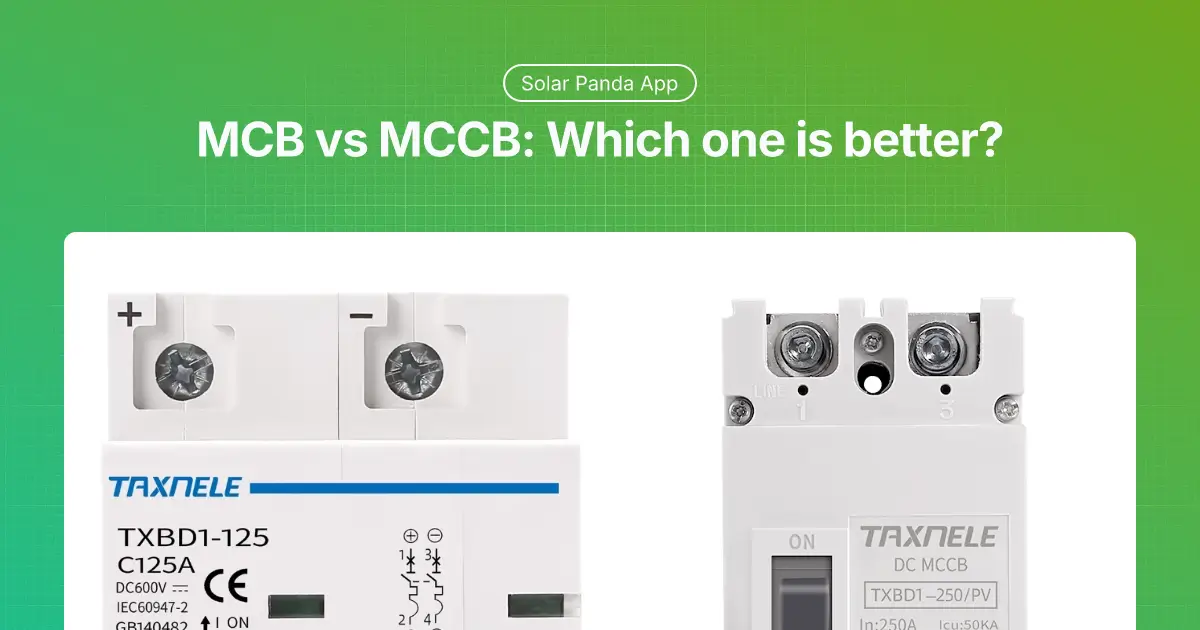
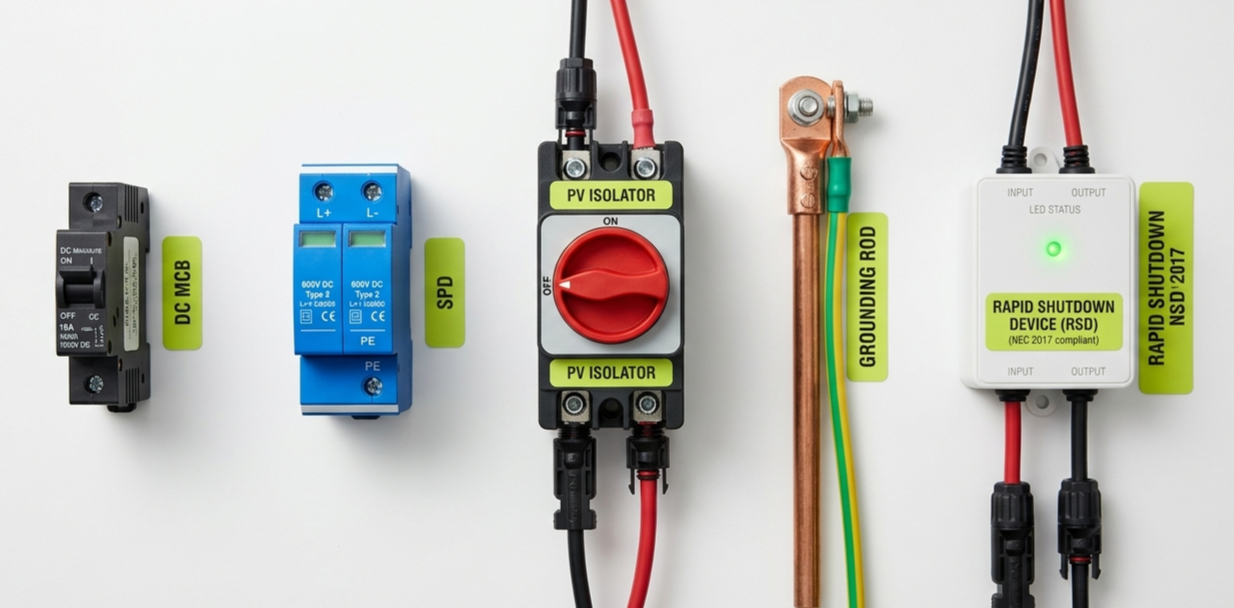
Breakers are non-negotiable safety devices that protect your system from electrical overloads and short circuits. Think of them as the last line of defense between a minor electrical fault and a house fire. Place a breaker between each major component connection — you'll typically need at least 3 to 4 breakers in a standard setup.
Common Beginner Mistakes
| Mistake | What Happens |
|---|---|
| ⚠️ Undersized breaker | Trips too often under normal load — frustrating and disruptive |
| 🚨 Oversized breaker | Won't trip fast enough during a fault — risks fire and component damage |
| ❌ Using AC breakers on DC circuits | Cannot safely interrupt DC current — arc flash hazard |
🔴 Important: For DC-side circuits (panels to SCC, SCC to battery), always use DC-rated breakers — not standard AC breakers. DC electricity behaves very differently when a circuit is interrupted and requires specialized arc suppression.
To size the breaker between your battery and inverter, try our Breaker Sizing Calculator — or get the full parts list from the Solar Setup Calculator.
🔄 Putting It All Together
Here's how all six components connect in a basic off-grid solar setup:
🌞 Solar Panels
→
🎛️ Charge Controller
→
🔋 Batteries
→
🔌 Inverter
→
🏠 Your Appliances
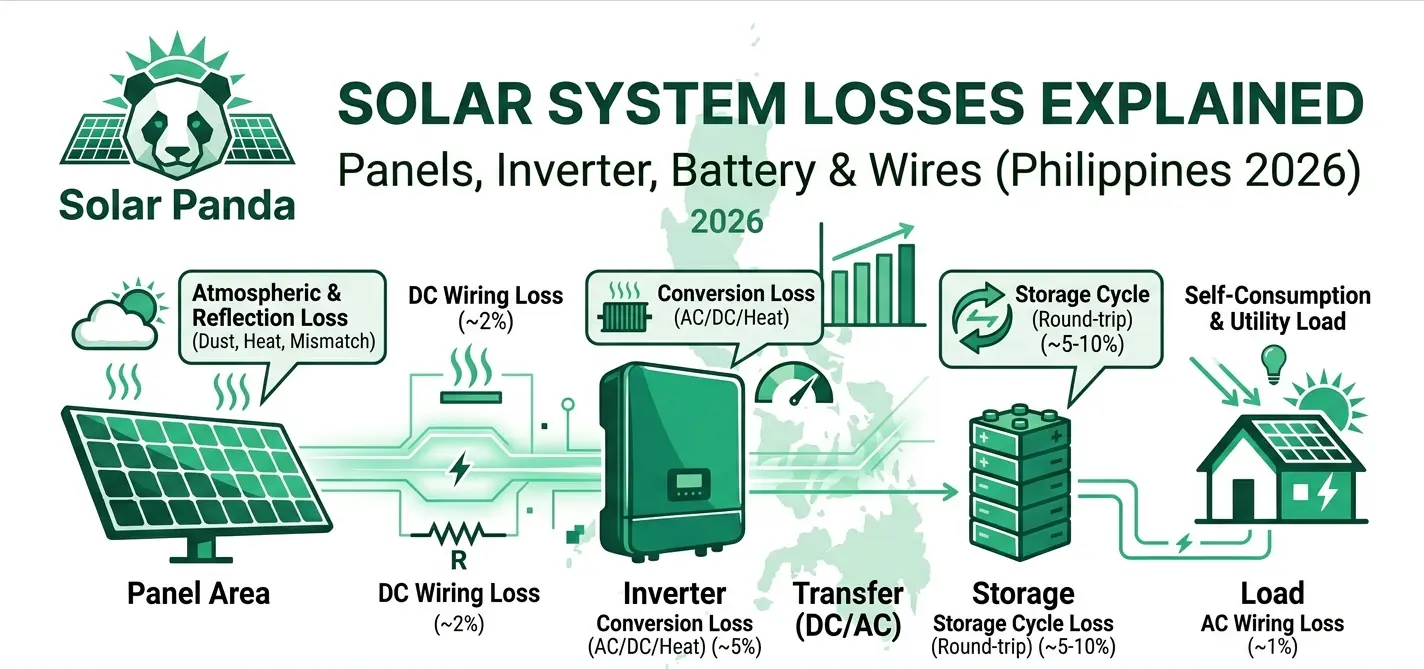
The breakers sit between each of those arrows, and the wires are the roads connecting everything. When the sun shines, the panels generate DC power, the SCC regulates it and charges the batteries, and the inverter converts battery power to AC so your appliances run normally.
Once you understand this flow, shopping for components and planning your layout becomes much less overwhelming. Start small, learn as you go, and scale up when you're ready. Thousands of Filipino homeowners are already doing this — and you can too. 💪
Ready to figure out exactly what size system you need? Use our FREE Solar Setup Calculator to get a personalized component list based on your actual monthly consumption. 🚀