Home solarPhilippinesPractical2026
5 Common Solar Setup Disasters in the Philippines (And How to Avoid Them)
Philippines · 2026 · By Solar Panda
Paying a Meralco bill and weighing whether solar is worth it? You do not need to be an engineer. You only need to know what usually goes wrong so you can ask better questions, spot red flags in quotes, and avoid the “cheap now, expensive later” trap.
Solar can lower your bill and keep lights on during brownouts. But when people cut corners — thin wires, skipped safety parts, wrong battery habits, or a system that is too small for rainy season — the story turns into extra cost, early replacement, or worse, fire risk. None of that is inevitable.
This article is not here to scare you off solar. It is here so you understand the few big mistakes that repeat in real Philippine installs. If something touches your house mains or you are unsure, always get a licensed electrician involved.
The short version
Use the right wire thickness (not the cheapest roll), add proper fuses and breakers, treat batteries gently, size panels for cloudy weeks not just sunny days, do not plug too much into the inverter at once, and keep outdoor gear dry. Get those right and you are already ahead of most rushed jobs.
Why this matters before you sign a quote
When you talk to a seller or installer, you will hear numbers: watts, amps, “12V,” “MPPT,” DoD. You do not need to master all of it on day one. You do need to know that cheap packages sometimes skip things that keep you safe — and that rainy season in the Philippines (roughly June to November) is part of real life, not a footnote.
Most of us want a fair price. The trick is knowing where cutting cost hurts you later (replacing batteries every year, fried inverter, or unsafe wiring). The sections below start with simple explanations, then point to deeper reads when you are ready.
1. Undersized wires
Thin wires can overheat — fire risk
What it means
Think of wire like a water pipe. If the pipe is too narrow for how much water (electricity) is flowing, things get hot. In wiring, that heat can melt plastic around the wire and, in bad cases, start a fire. Some cheap kits use thin wire or CCA (copper-coated aluminum) that looks “thick enough” on the outside but does not perform like solid copper when it counts.
Why you see this in the Philippines
- Everyone loves a bargain — sometimes the wire is where sellers save money.
- Long runs from roof to battery or inverter need thicker wire than a short run; that is easy to skip if nobody measures.
- Guessing wire size from a Facebook photo instead of using a real sizing chart or the inverter manual.
What to do instead
- Ask your installer (or follow the manual) for the correct wire size for each run — especially from panels to charger and from battery to inverter.
- Buy quality copper wire from a trusted shop; be careful with random “surplus” rolls.
- If you upgrade to a bigger inverter, the cables and safety gear must grow with it — not stay the same.
ℹ
Quick reference only: “AWG” is just the numbering system for wire thickness (smaller number = thicker wire in the usual sizes you will see). Real sizing depends on amps, distance, and your gear — always confirm with the manual or a pro.
| Rough amount of current (amps) | Example wire sizes people talk about | Remember |
|---|---|---|
| Up to about 20A | Often in the 14–10 AWG ballpark | Short runs are easier |
| About 20–80A | Often in the 10–6 AWG ballpark | Heat adds up fast |
| About 80A and up | Thicker cable or busbars — case by case | Connectors have limits too |
This table is only to help you understand the conversation. Your real build must follow the inverter manual, fuse sizes, and a qualified person when needed.
2. No proper breakers or surge protection
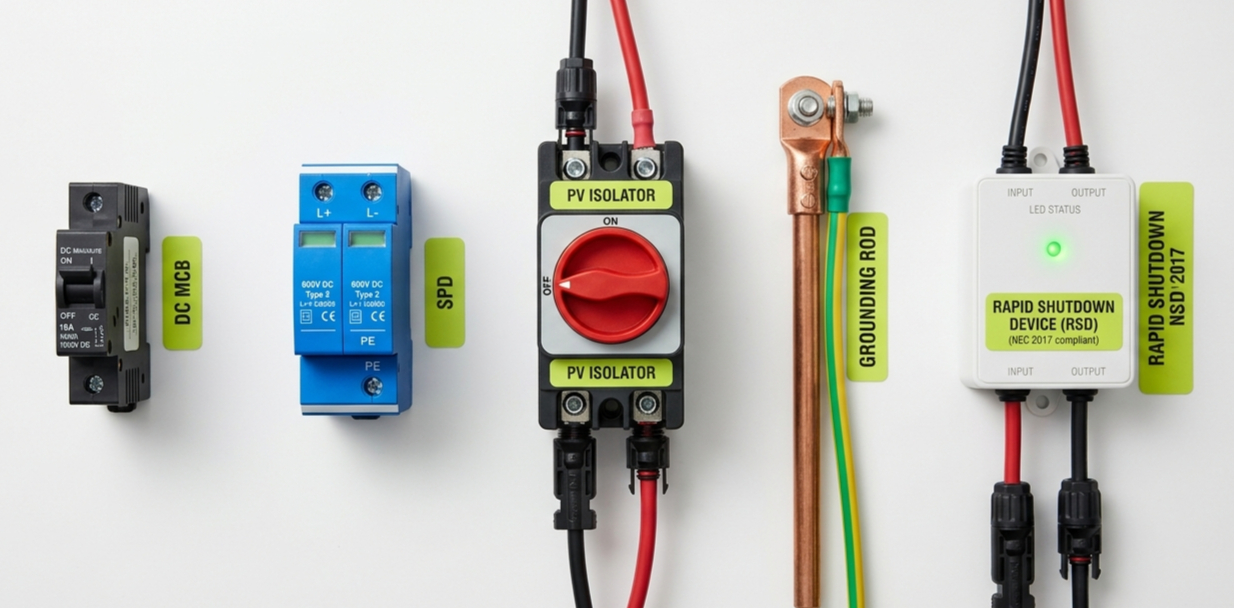
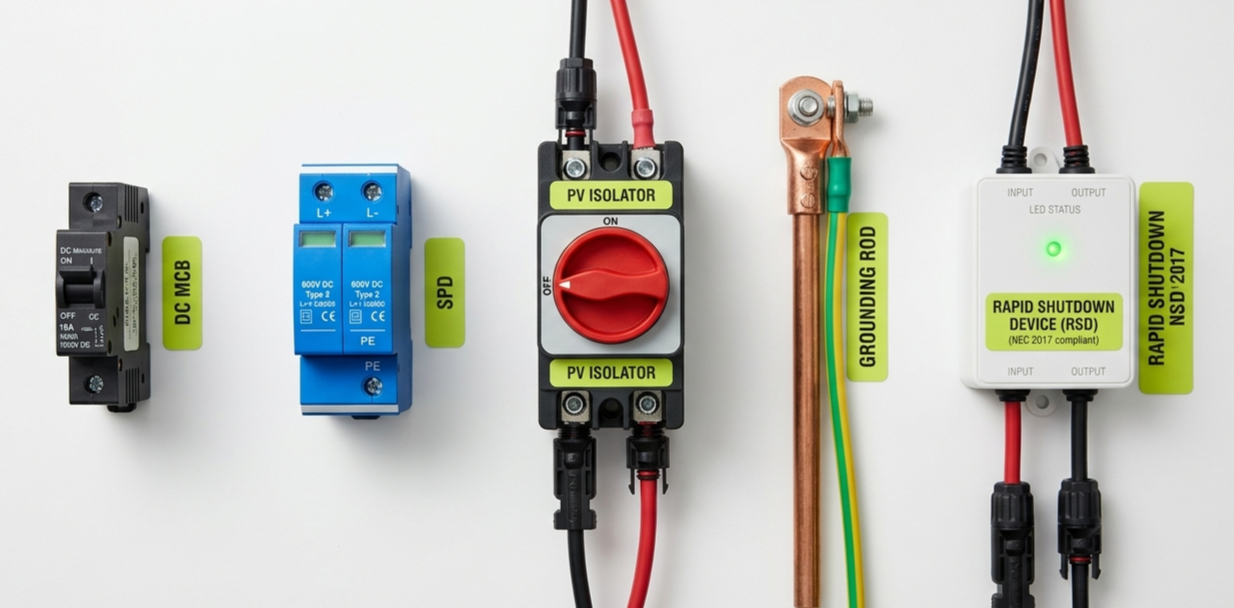
Missing fuses or breakers — one spark, big damage
What it means
Your battery stores a lot of energy in a small space. If something goes wrong — a loose wire, a short — you want a fuse or breaker to cut power before everything melts. Skipping those parts is like removing the safety valve. During thunderstorms (hello, rainy season), power spikes can also stress your solar charger and inverter. That is where surge protection sometimes helps — ask a pro what makes sense for your roof setup.
Why you see this in the Philippines
- Some “package” prices drop by leaving out breakers or fuses.
- House-style breakers (AC) are not the same as DC-rated gear for battery and panel lines — mixing them up is common.
- We get real storms; lightning near exposed wiring is not theoretical.
What to do instead
- Make sure your design includes the right fuses or breakers for panels, battery, and inverter paths — as the manual says.
- Read our simple guide on sizing the breaker between battery and inverter.
- Curious about breaker types? See MCB vs MCCB explained.
- During rainy season, ask whether surge protection fits your install — especially if you live in a storm-prone area.
3. Wrong battery habits
Batteries dying way too early
What it means
Batteries are often the most expensive part of a backup system. If you drain lead-acid types too deep, mix old and new packs, or let the charger use the wrong settings, capacity drops fast. It feels like you saved money at checkout — until you are buying new batteries every year.
Why you see this in the Philippines
- Older-style lead-acid batteries are still common because they look cheaper up front.
- DoD just means “how empty you let the battery get.” Going too empty too often wears batteries out.
- People sometimes mix random batteries together — they do not age the same way.
What to do instead
- For typical lead-acid, think of using only about half the stored energy before recharging — check what your battery maker says.
- Do not mix old and new batteries in one bank.
- Match your charge controller settings to the battery type (flooded, AGM, gel, or lithium).
- If you can stretch the budget, LiFePO4 often lasts longer per peso over time — we compare types in this battery guide.
⚠
Remember: A “cheap” battery that dies in a year is not cheap — it is a yearly subscription you did not sign up for.
4. Wrong solar sizing
Not enough power on cloudy weeks
What it means
It is easy to imagine “the sun is up all day.” In the Philippines, rainy season and heavy clouds are normal for months at a time. If your panels and battery were sized only for perfect sunny days, you will feel the system is “not enough” when the weather turns.
Why you see this in the Philippines
- People confuse “sunlight hours” with peak sun hours — the number that actually matters for sizing.
- June to November is not optional; plan for it.
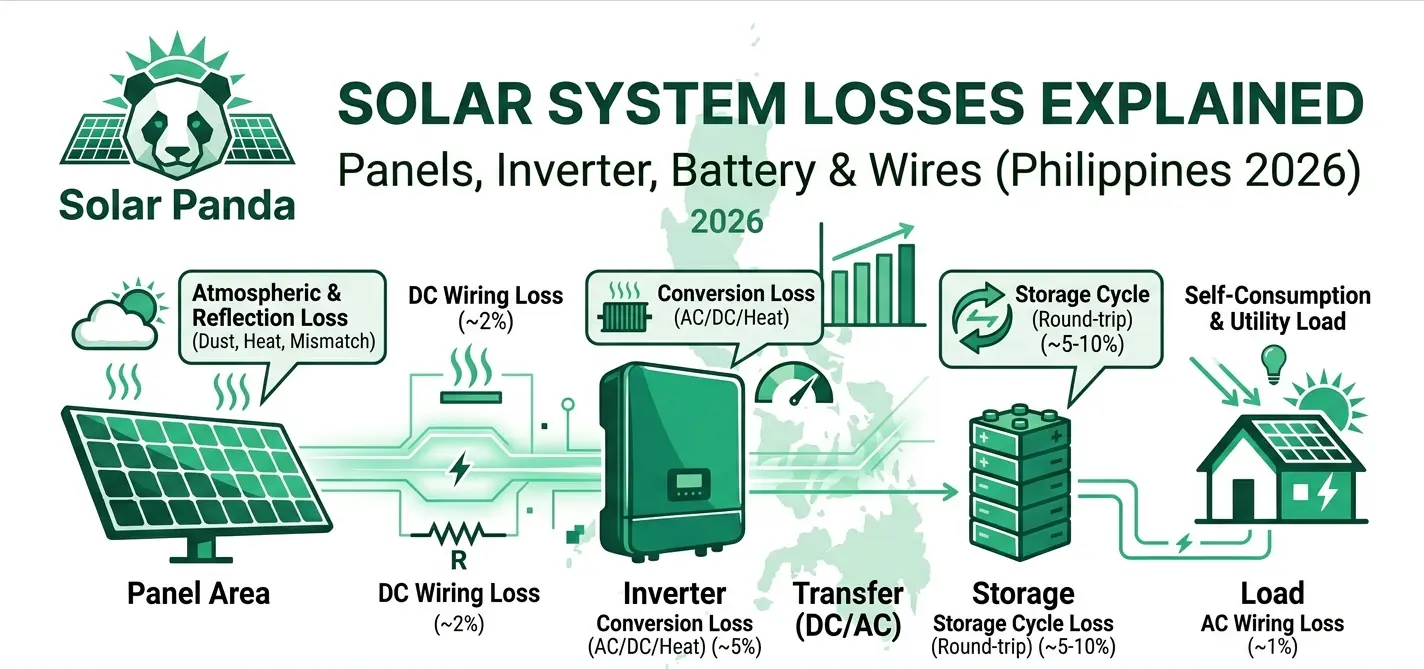
- Real life has losses — wiring, heat, dust — so you need a little extra margin.
What to do instead
- Picture a gray week, not your best beach day, when you think about panel count and battery size.
- Add roughly 20–30% buffer so normal losses do not surprise you.
- We explain weather and output simply in our peak sun hours guide.
- Use the Solar Panda calculator at the bottom of this page instead of guessing from a Facebook post.
5. Overloading the inverter
Too many appliances at once
What it means
Every inverter has a power limit. Some appliances need a quick burst of extra power when they start — like a ref compressor. If you run ref + rice cooker + kettle at the same time on a small inverter, it may trip or get damaged. “It worked yesterday” is not a guarantee when loads stack up.
Why you see this in the Philippines
- Families add one more appliance, then another — nobody recalculates.
- The sticker on the inverter shows two ideas: steady power vs short burst power — easy to mix up.
- Not everyone separates “must run during brownout” from “nice to have.”
What to do instead
- Write down the watts on each appliance label — or let our AI Appliances Reader pull them from a photo — and decide what can run at the same time.
- Pick an inverter with enough room for motor starts (ref, pump).
- If you can, put critical loads (lights, router, fan) on a separate mindset from heavy stuff (iron, AC).
- Still learning system size? Our 12V vs 24V guide helps explain how bigger home backups are usually planned.
!
Real life: Stagger heavy loads — run the rice cooker when the ref is not starting its compressor, and so on.
Bonus: Poor outdoor installation
Rain, floods, rust
What it means
Electricity and water do not mix. If outdoor boxes are not sealed, cables sit in puddles, or batteries sit on the floor in a flood-prone garage, you get rust, leaks, and shock risk. Rusty connections also get hot — same idea as thin wires.
What to do instead
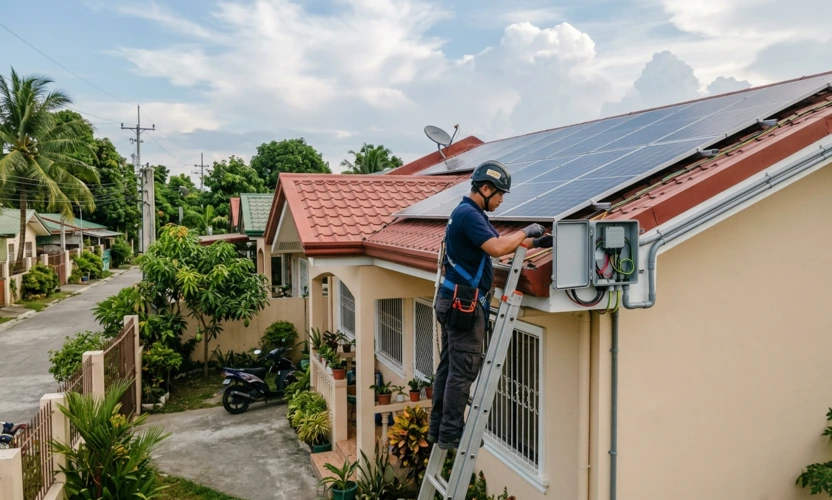
- Use proper sealed fittings and outdoor-rated boxes where wires enter the roof or wall.
- Route cables so water runs away from connections, not into them.
- Lift batteries off the floor; check everything after big storms.
- Keep a simple habit: read maintenance basics and panel care after typhoon season.
What to ask next
Solar is safe and normal when it is planned honestly: right wire thickness, proper safety parts, batteries treated well, enough panels for real Philippine weather, an inverter that matches your lifestyle, and outdoor gear that can handle rain.
Use this article as a checklist of questions for any quote. If something touches your main house wiring or you feel unsure, that is the right time to call a licensed professional — not YouTube alone.
Start with your real electric bill — no guesswork
Plug in your monthly consumption and see what a right-sized system might look like before you talk to sellers.
Try the monthly consumption calculator