Controller Required Calculator
Know the right amperes of the controller you need.


About the Controller Required Calculator
This solar charge controller calculator tells you the ampere (A) rating you need so your panels can recharge the battery within a day of sunlight. The charge controller sits between your solar panels and battery, regulating the current so the battery charges safely — and if it's undersized, it becomes the bottleneck that starves your bank of power.
It works from your battery capacity in amp-hours and your daily peak sun hours: it divides the amp-hours by the sun hours to get the base charging current, then adds a loss margin so the recommendation holds up in real conditions. In the Philippines most areas average 4–5 peak sun hours, and clouds, heat, and wiring losses eat into panel output — the margin keeps the controller from running maxed out.
Once you know the ampere rating, match it to a real unit in the Solar Charge Controller Finder. Remember a hybrid inverter already has an MPPT controller built in, so you only need a standalone controller for a regular (non-hybrid) inverter setup.
Related calculators
Solar Charge Controller FAQ
Common questions about sizing a solar charge controller.
What size solar charge controller do I need?
Divide your battery capacity (amp-hours) by your daily peak sun hours to get the base charging current, then add a margin for real-world losses. For example, a 200Ah battery over 5 sun hours needs roughly 40A plus margin. This calculator does that automatically and recommends the ampere rating to look for.
Should I choose an MPPT or PWM charge controller?
MPPT controllers are more efficient and harvest more power, especially when your panel voltage is much higher than your battery voltage, so they suit larger setups. PWM controllers are cheaper and fine for small, matched systems. Either way, the ampere rating from this calculator is the number to size against.
Why does the calculator add a margin to the ampere rating?
Panels rarely hit their rated output because of heat, dust, shading, and wiring losses, and running a controller at its exact limit shortens its life. The margin ensures the recommended controller comfortably handles your array's real charging current.
Do I still need a charge controller if I have a hybrid inverter?
No. A hybrid inverter already includes an MPPT solar charge controller, so it charges the battery from panels directly. You only need a standalone controller for a regular (non-hybrid) inverter or a controller-only build.
Blog
View all blogs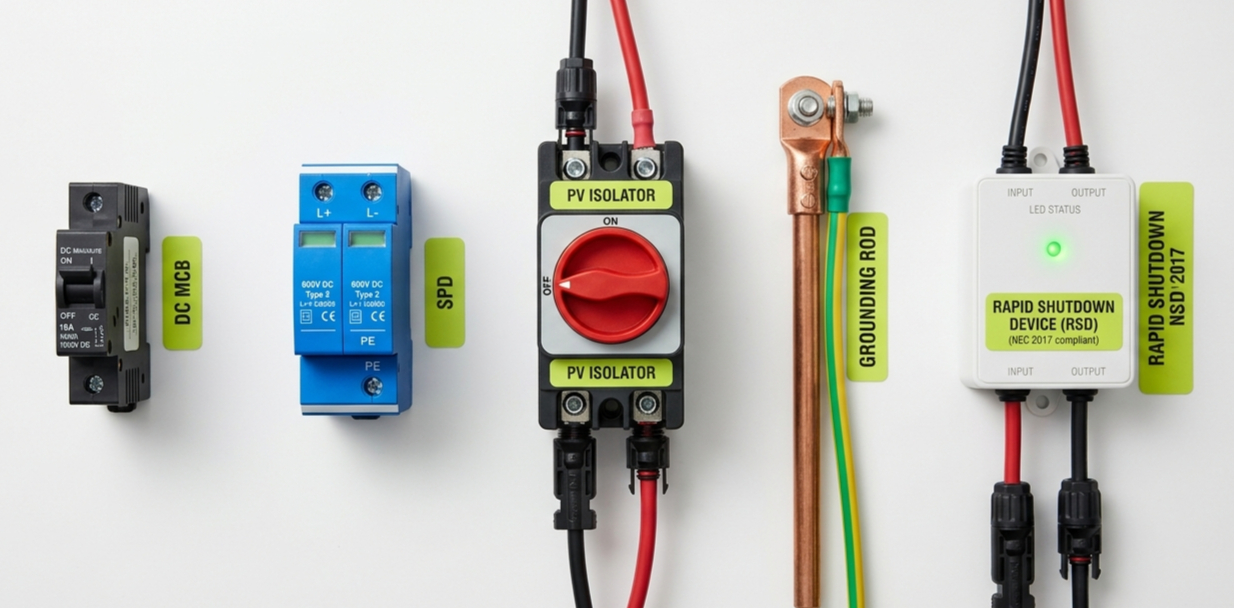
5 Essential Safety Components Every DIY Solar Setup Needs
8 min read
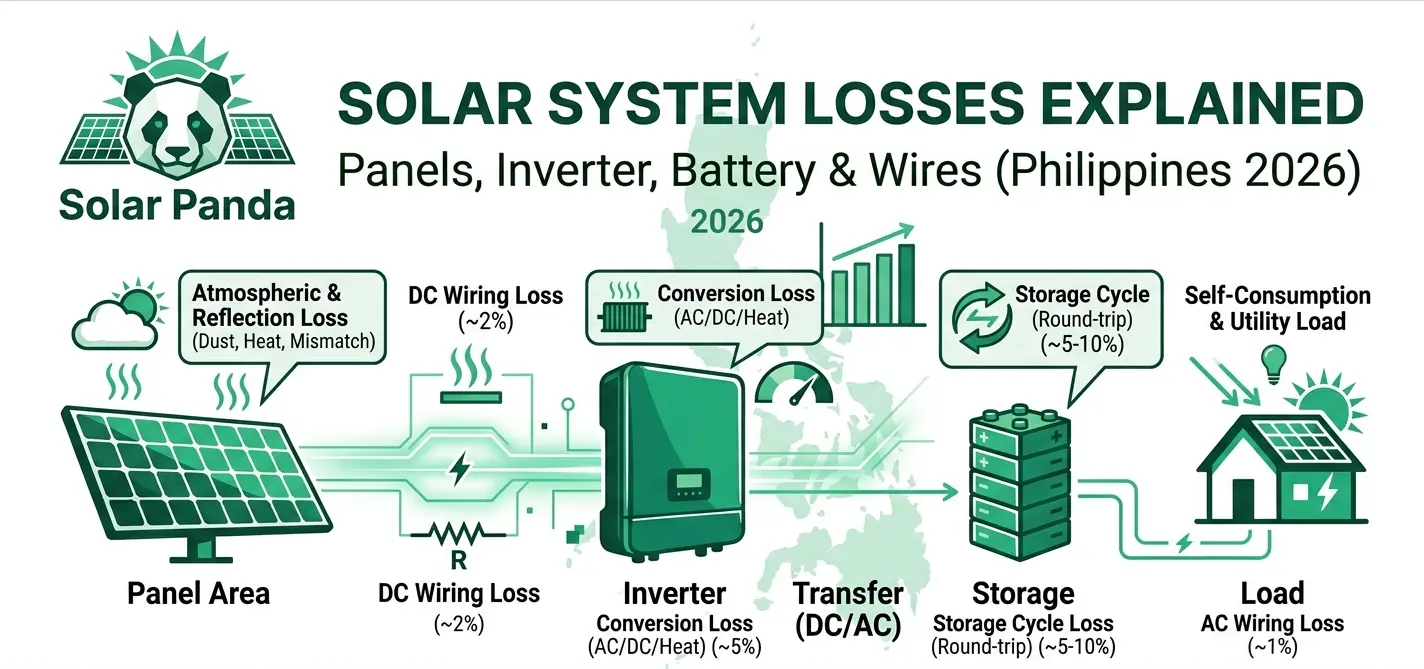
Solar System Losses Explained: Where Power Disappears (Philippines 2026)
8 min read

5 Common Solar Setup Disasters in the Philippines (And How to Avoid Them)
9 min read
12V vs 24V Solar Setup: Which One Should You Choose? (Philippines 2026)
8 min read